

For franchises, data is only valuable when it’s connected, accurate, and actionable. MyTime...
.png?width=878&height=494&name=Untitled%20design%20(78).png)
Credit and debit card processing fees continue to rise across service-based industries—cutting directly into margins for franchise and multi-location brands. For operators managing 5, 50, or 200+ locations, these costs compound quickly, often forcing tough decisions around pricing, staffing, or profitability.
Most POS systems address this pressure with simplistic surcharge settings or manual workarounds.
MyTime’s new Surcharging feature gives franchises a smarter option: automatically recover processing fees without increasing service prices or complicating the client experience.
This guide explains what surcharging is, why more franchises are adopting it, and how MyTime implements a scalable, compliant solution that works at every location.
What Is Surcharging? (Simple Definition for Franchise Operators)
Surcharging is the practice of adding a small, clearly disclosed fee to a transaction when a client pays with a credit or debit card. The fee offsets the card processing cost that businesses otherwise absorb.
Why Surcharging Matters More in 2026 and Beyond
Processing fees have risen industry-wide due to several converging trends:
- Higher interchange rates
- Increased card-not-present transactions
- Greater adoption of digital wallets and tap-to-pay checkout
For single-location businesses, fee increases are painful.
For franchises and multi-location operators, they are exponential.
Without surcharging, operators face:
- Shrinking margins
- Pressure to raise service prices
- Unpredictable month-end financials
- Franchisee frustration when fees vary by region
Surcharging protects margins at scale without forcing price increases.
How MyTime Implements Surcharging for Multi-Location Brands
MyTime treats surcharging as a configurable payment feature that applies automatically at checkout based on how rules are set per location. Once enabled, surcharge behavior is handled by the system across POS and online payments, rather than by staff at the counter.
.gif?width=1920&height=1080&name=Surcharging%20Settings%20(1).gif)
1. Granular, Location-Level Surcharge Rules
Operators can define surcharge behavior across key dimensions that determine how fees are applied at checkout, giving brands precise control without adding operational complexity.
Payment Type
Define which card types are eligible for surcharges:
- Credit cards only
- Debit cards only
- Both credit + debit
Transaction Type
Apply surcharge rules based on how the payment is taken:
- Card-present
- Card-not-present (online, in-app, call center)
- All transactions
Fee Structure
Choose how surcharge amounts are calculated:
- Percentage-based (e.g., 2.5%)
- Flat fee (e.g., $0.50 per card transaction)
- Hybrid options for specific payment categories
This flexibility allows brands to align surcharge configuration with local requirements , franchise agreements, and margin goals.
2. Complete Transparency for Clients
One of the biggest risks in surcharging is confusing clients.
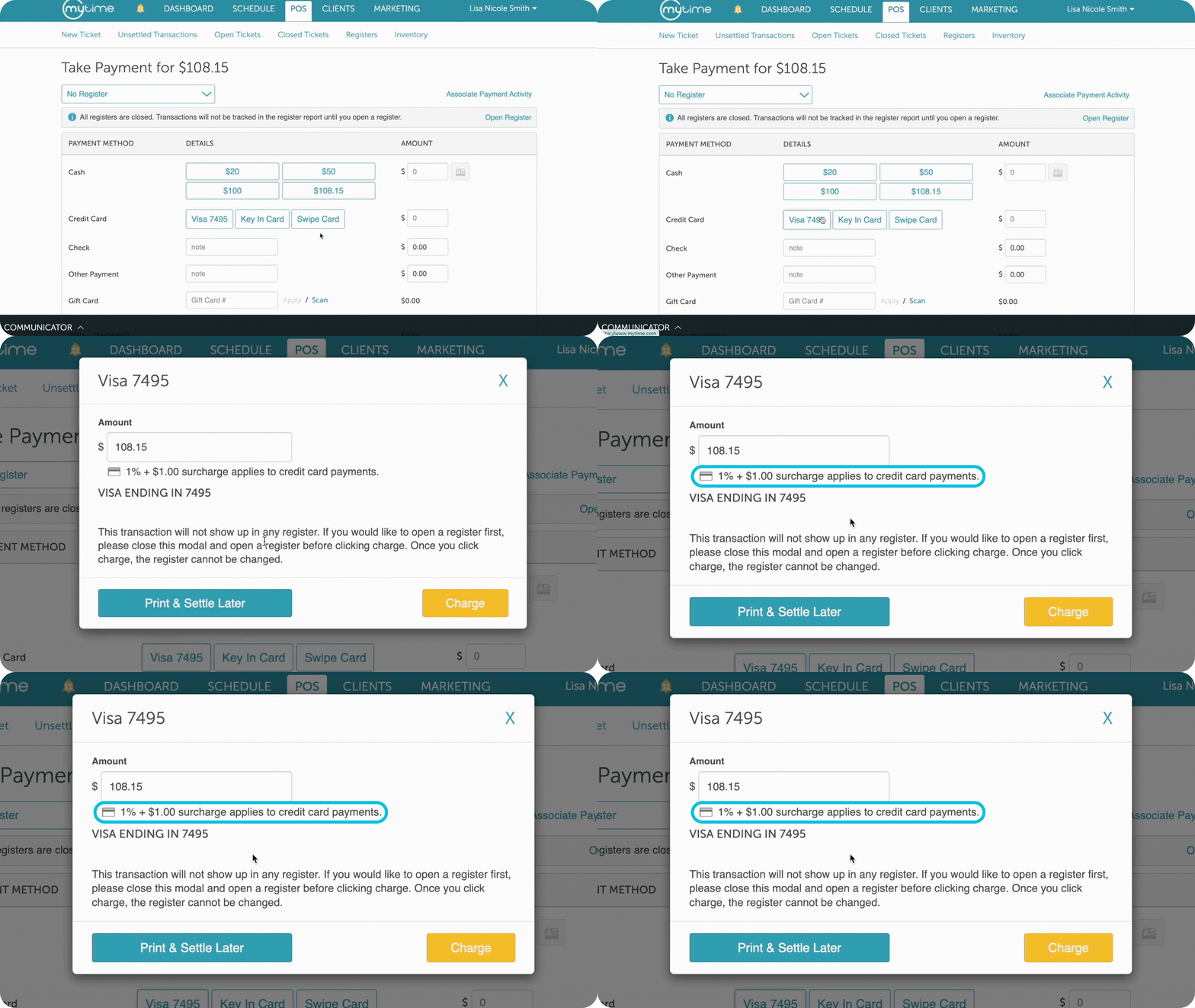
MyTime prevents this by showing surcharge details before payment across:
- POS checkout screens
- Client-facing terminals
- Online booking and in-app flows
- Membership, package, and gift card purchases
Clients see exactly what they’re being charged, why, and how it works—reducing confusion, callbacks, and chargebacks.
Transparency is a competitive advantage, not a cost.
3. Fully Automated Execution at Checkout
Once enabled, MyTime:
- Calculates and applies the correct surcharge automatically
- Applies it as a separate line item
- Displays it compliantly before payment
- Includes or excludes it during refunds (based on operator rules)
No manual intervention.
No staff scripting.
No risk of inconsistency across locations.
This is essential for franchise brands where front desk workflows must stay clean and predictable.
.png?width=2000&height=769&name=SUNDAY%20(3).png)
Benefits of Surcharging for Franchise & Multi-Location Operators
Surcharging isn't just a payment tactic — it's a strategic tool that protects margins and improves financial clarity at every location.
1. Margin Protection Without Raising Prices
Instead of raising service prices across the board, operators recover the processing fee associated with the payment method used.
At scale, the savings are substantial:
- Lower operating expense per transaction
- More predictable financial performance
- Stronger unit economics for franchisees
2. More Consistent Fee Handling Across Locations
MyTime allows surcharge rules to be configured by location and standardized using templates, helping brands apply the same approach across their network.
This ensures:
- More consistent fee recovery at checkout
- Reduced location-by-location guesswork
- Predictable guest experiences
- Alignment with brand-wide financial strategy
3. Clear Accounting Records for Surcharges
Finance teams get clear visibility into surcharge activity by location.
MyTime automatically:
- Recordssurcharges as separate line items on POS tickets
- Displays surcharge amounts consistently on payments and refunds
- Includes surcharge data as distinct items in accounting exports and journal responses
- Makes surcharge activity easier to identify during financial review and reconciliation
This is especially valuable for operators managing complex multi-state books.
4. Better Customer Transparency and Fewer Disputes
When guests see surcharge details upfront:
- Confusion is reduced
- Payment disputes are less likely
- Front desk teams spend less time explaining charges
- Trust is reinforced at checkout
In a world where price sensitivity is rising, transparency matters more than ever.
5. Easy Adoption for Franchisees
Once surcharge rules are configured for a location, they are applied automatically at checkout.
No complex training required.
No manual steps for staff
No inconsistent application during payment
This makes surcharging a repeatable, location-level configuration rather than a manual, staff-driven process.
Compliance: What Operators Need to Know
MyTime supports surcharge compliance requirements, but operators should understand the basics:
- State laws vary — some allow surcharges with caps, while others restrict or prohibit them.
- Debit and credit rules differ — debit surcharges are regulated separately in many regions.
- Clear disclosure is required — card networks mandate upfront transparency before payment.
- Operators must confirm local requirements before enabling surcharging.
MyTime provides the tools for compliance, but operators remain responsible for confirming and meeting local compliance requirements.
.png?width=4000&height=2000&name=SUNDAY%20(5).png)
What This Means for Your Franchise Network
MyTime’s surcharging feature helps multi-location brands:
- Protect margins automatically
- Keep service pricing stable even as processing fees rise
- Apply surcharge behavior more consistently across locations
- Reduce guest confusion through clear, upfront fee display
- Maintain clearer financial records for surcharge activity
- Support franchisees with predictable, consistent fee structures
For brands facing margin pressure, rising interchange fees, or inconsistent fee handling across locations, surcharging is one of the simplest high-impact levers available.
How to Get Started
Whether you’re evaluating MyTime or already using the platform, enabling surcharging is straightforward.
If You’re a MyTime Customer
👉 Contact Support or your account manager to enable surcharging and configure location-level rules
If You’re New to MyTime
👉 Book a demo to see how surcharging works alongside MyTime’s payments, POS, and financial automation tools